SS304 Shim Stock
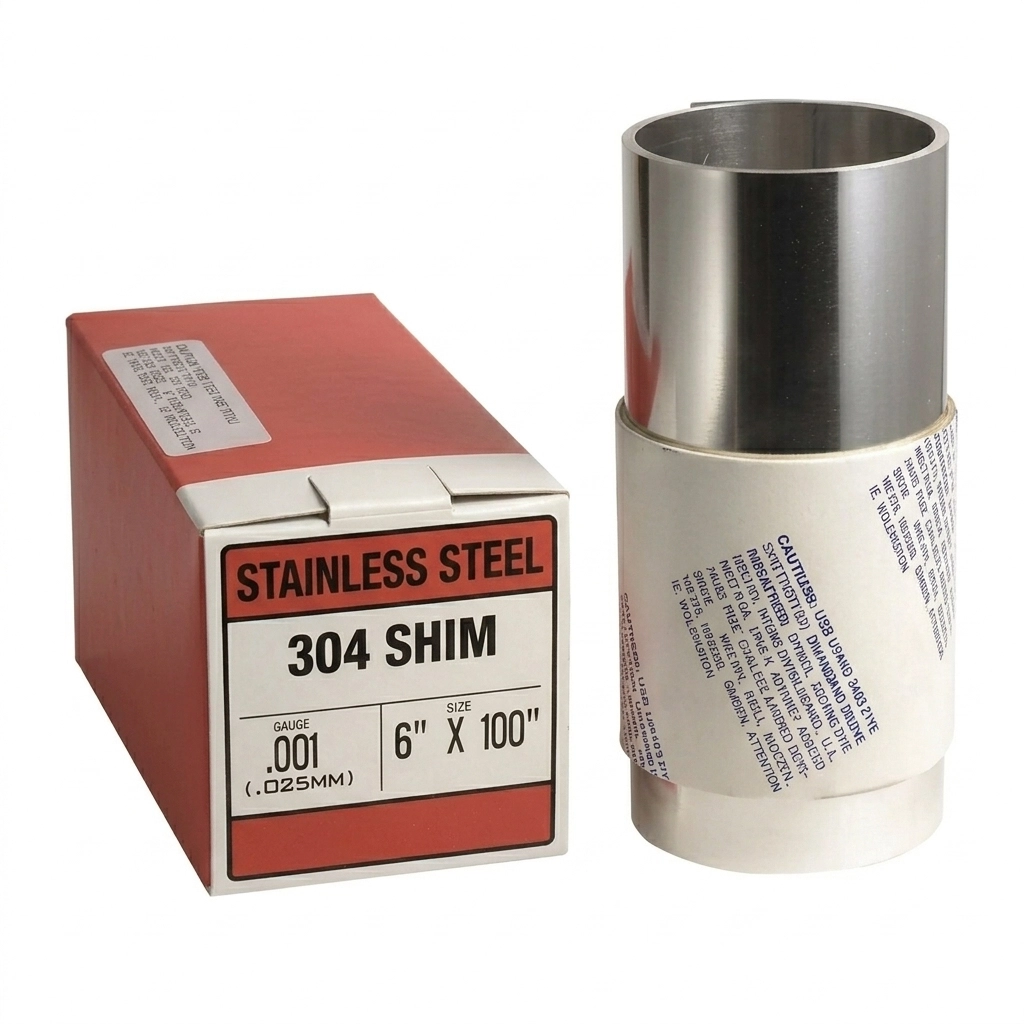
SS304 Shim Stock is a corrosion-resistant stainless steel shim material for precise spacing, alignment and clearance adjustment in machinery, plant equipment and general industrial applications. Supplied in 6" x 50" and 6" x 100" rolls from 0.025mm (0.001") to 3.00mm (0.118") thick, it lets technicians cut exact-size shims for bearing fits, pump and gearbox alignment, and machine setup where rust resistance matters.
SS304 Shim Stock Specifications
| SS304 Shim Stock | ||
|---|---|---|
| Parameter | Details | Typical Use |
| Material | SS 304 Stainless Steel | Corrosion-resistant machinery spacing |
| Form | Rolls or sheets | Cut-to-size shims and alignment pads |
| Available lengths | 6" x 50" and 6" x 100" | Roll supply for cut-to-size shims |
| Thickness range | 0.025mm (0.001") to 3.00mm (0.118") | Micro to larger clearance adjustment |
| Corrosion resistance | Good general and light marine resistance | Industrial and plant equipment |
| Supply note | Available by roll, sheet or cut length as per stock | Project and workshop procurement |
Buying SS304 Stainless Steel Shim Stock for Reliable Spacing
SS304 Stainless Steel Shim Stock is selected when a spacer must resist rust while delivering accurate, long-lasting clearance control. Its combination of corrosion resistance and machinability makes it a dependable choice for general plant equipment, food and chemical processing machinery, and light marine installations where carbon steel would degrade over time.
Supplied in 6" x 50" and 6" x 100" rolls from 0.025mm (0.001") to 3.00mm (0.118") thick, SS304 shim stock gives technicians full control to produce the exact thickness required for bearing fits, pump alignment, gearbox shimming and machine leveling. The stainless surface also keeps the shims clean and reusable across repeated maintenance cycles.
SS304 Shim Stock Properties and Tolerances
SS304 is an austenitic stainless steel containing around 18% chromium and 8–10% nickel, giving it an excellent balance of strength, corrosion resistance and workability. The alloy resists oxidation and chemical exposure far better than carbon steel and is non-magnetic in its annealed state, while retaining useful strength down to cryogenic temperatures. Shim stock in 304 is normally supplied in full-hard condition so thin gauges hold their rigidity during cutting and fitting, with tensile strength up to roughly 1,275 MPa (185 ksi).
Precision-rolled SS304 shim stock holds tight thickness tolerances. As a working guide, full-hard 304 at 0.127mm (0.005") typically carries a tolerance of about ±0.0127mm (±0.0005"), and thinner gauges are rolled to even tighter limits. This predictability matters for bearing fits, pump and gearbox alignment, and machine leveling where the final clearance must be right the first time.
Common Applications for SS304 Shim Stock
SS304 shims are a fixture of industrial maintenance and repair work. Technicians use them to align machinery bases, mount motors, level jigs and fixtures, and control clearances in food production equipment, structural assemblies and machinery frames. In MRO and CNC fabrication environments, pre-cut or laser-shaped 304 shims cut downtime and improve setup repeatability, while the corrosion-resistant surface keeps the shims reusable across repeated maintenance cycles.
Choosing the Right SS304 Shim Thickness
Match the shim gauge to the correction required and the load involved. Thin gauges from 0.025mm to 0.10mm suit fine adjustment, calibration and precision spacing; 0.10mm to 0.50mm covers general alignment, spacing and fit correction; and thicker stock from 0.50mm up to 3.00mm provides structural packing and heavy-duty support where rigidity matters. Measure the gap at multiple points with feeler gauges, dial indicators or a micrometer before cutting, and prefer a single exact-thickness shim over many thin layers in high-vibration installations.
Cutting and Fitting SS304 Shim Stock
Before cutting, measure the required thickness with feeler gauges or a micrometer so the chosen gauge balances alignment with mechanical stability. Simple shapes can be sheared with tin snips or punched with hand tools; more complex profiles are best handled by laser cutting, waterjet or CNC. When fitting, keep the shim seated without binding or warping, and avoid stacking more than about four layers — excessive stacking can introduce flex and vibration, so an exact-thickness shim is preferable where possible.
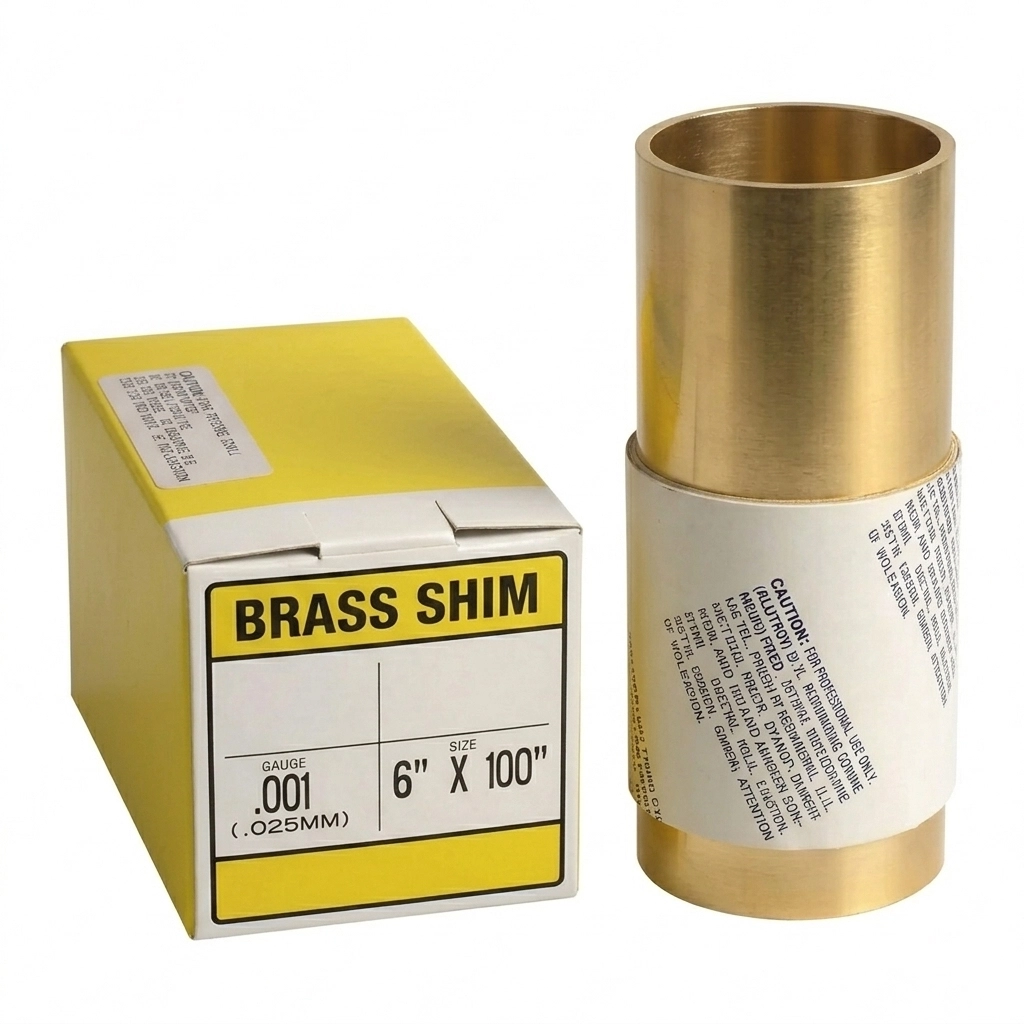
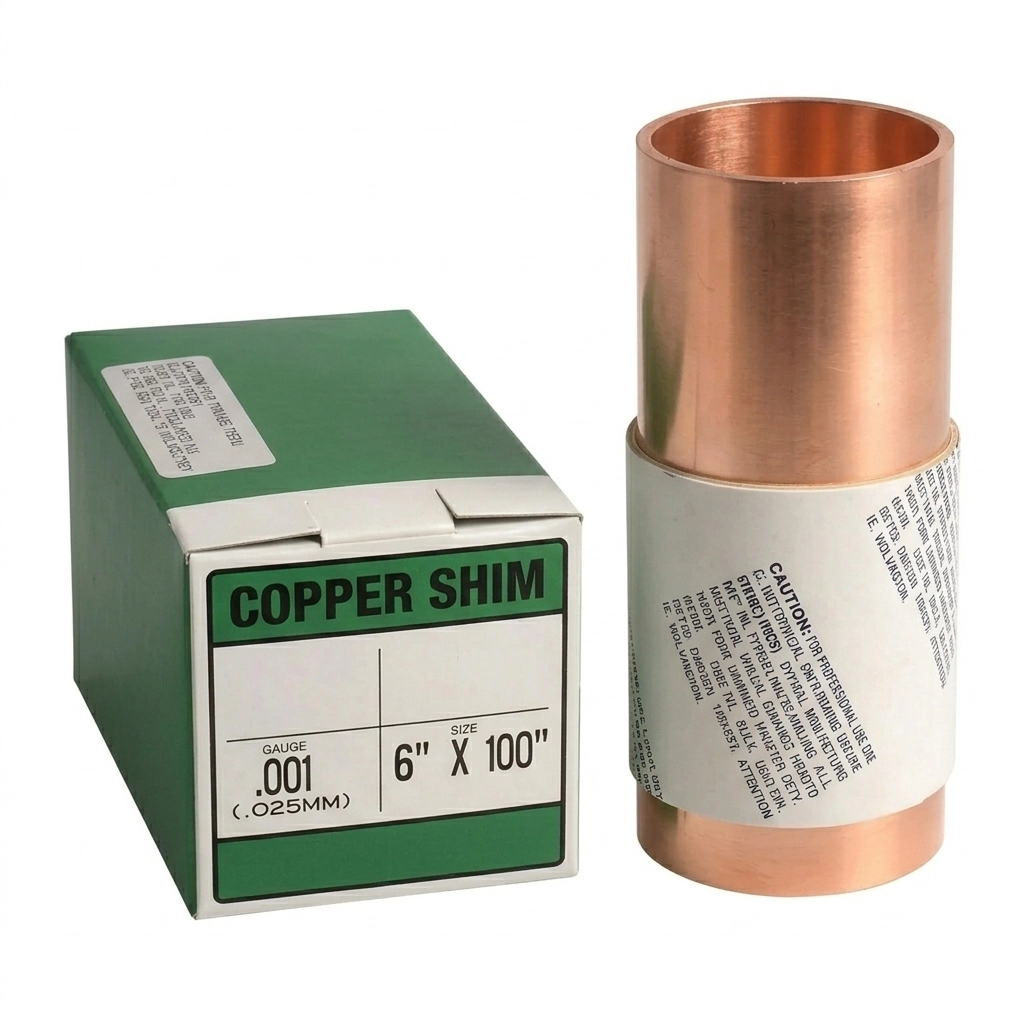
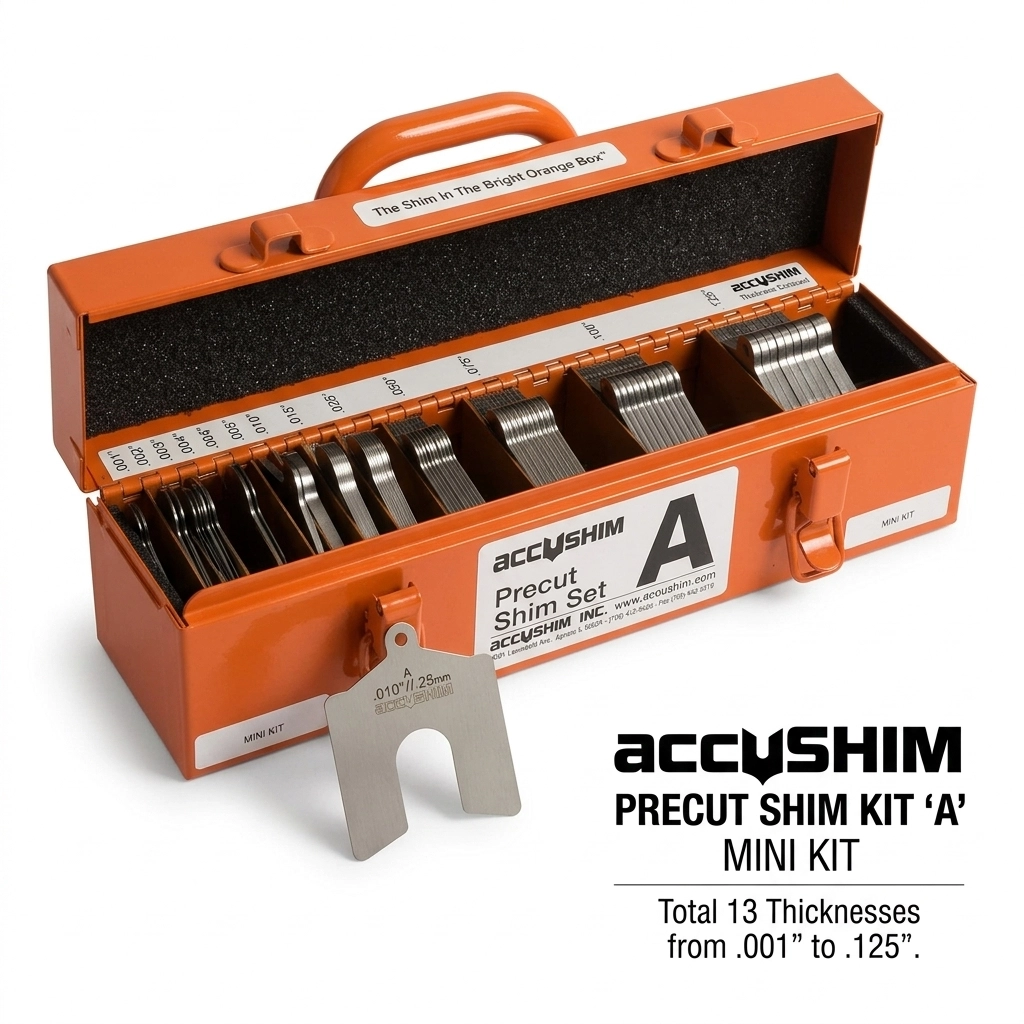
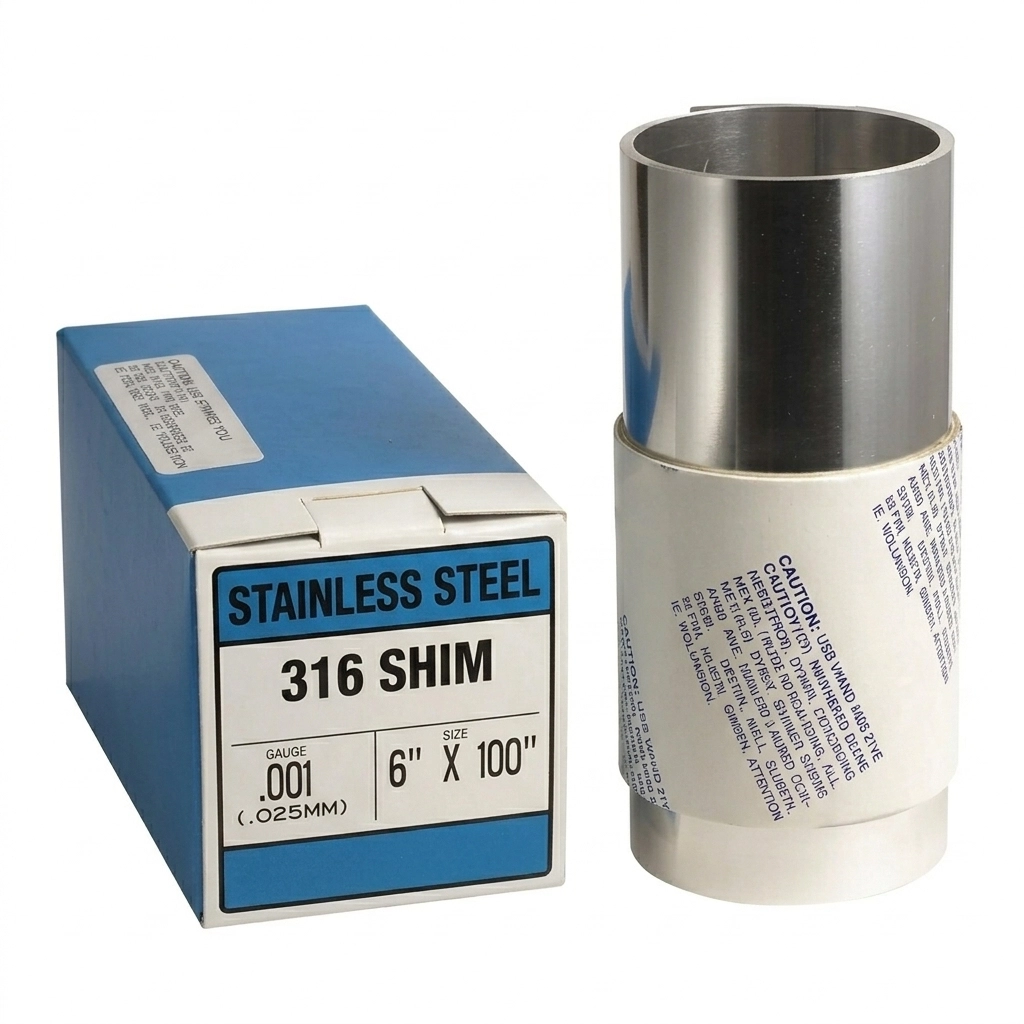
If your application demands even higher corrosion resistance in aggressive marine or chemical service, compare this page with our SS316 Shim Stock. Buyers can also review Brass Shim Stock, Copper Shim Stock and Pre Cut Shim Sets, or start from the Shim Stock pillar page.
The most important checks before ordering are the required thickness, width and quantity, and whether the operating environment needs general SS304 resistance or the superior marine-grade protection of SS316. Confirming these points early ensures you choose the right stainless shim stock for a reliable, cost-effective result.
Similar Products